
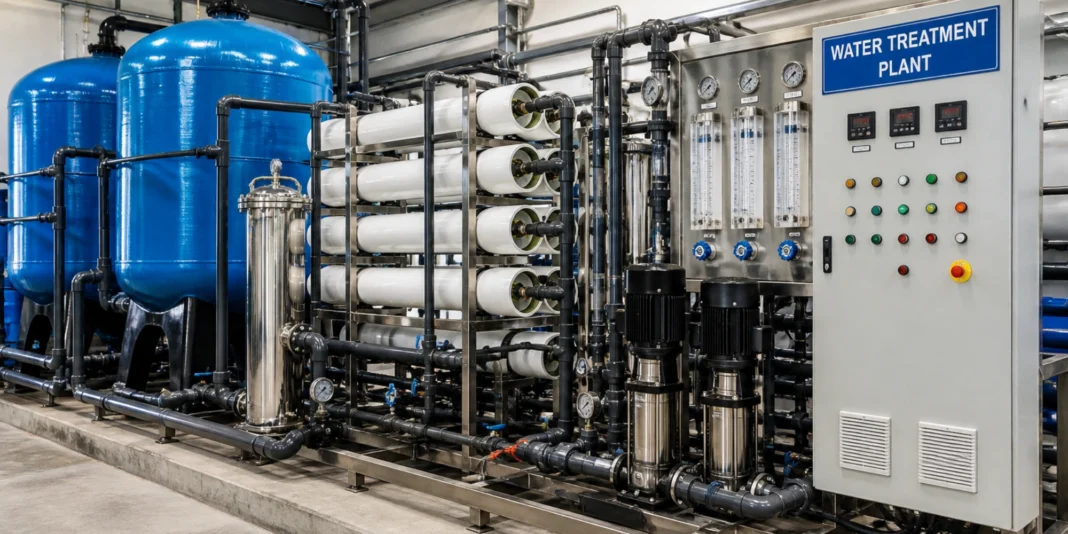
Water Is One of the Quiet Forces Behind Every Successful Business
When business owners think about improving operations, they usually focus on things like customer service, staffing, marketing, or new equipment. Water rarely makes the top of the list. Yet it’s involved in far more daily activities than most people realize.
Every cup of coffee served, every dish washed, every cooling system running in the background, and every employee washing their hands depends on water. When water quality is poor, problems slowly begin to appear. Equipment becomes less efficient, maintenance costs increase, products lose consistency, and customers may even notice subtle differences without understanding the cause.
Reliable water isn’t simply another utility. It’s part of the foundation that supports smooth business operations every single day.
Different Industries Face Different Water Challenges
No two businesses use water in exactly the same way.
A bakery has different needs than an office building. A manufacturing plant operates differently than a hotel, while a healthcare clinic depends on water for completely different reasons than a car wash or a brewery.
That’s why commercial water treatment should never follow a one-size-fits-all approach.
The first step is understanding how water flows through daily operations, identifying where quality matters most, and designing a solution that fits those specific needs rather than recommending equipment based on assumptions.
Good planning almost always leads to better long-term results.
Customer Experience Begins Behind the Scenes
Customers rarely think about a business’s water quality.
Instead, they notice the results.
Coffee tastes fresher.
Ice cubes are crystal clear.
Glassware sparkles.
Bathrooms stay cleaner.
Food preparation feels more consistent.
Guest rooms feel more comfortable.
For restaurants and hotels, water quality quietly shapes the customer experience from beginning to end. Better water improves beverage flavor, protects commercial kitchen equipment, reduces mineral buildup on fixtures, and supports the cleanliness guests naturally expect.
People may never compliment the filtration system directly, but they certainly appreciate the difference it creates.
Sometimes the smallest details leave the strongest impression.
Equipment Lasts Longer with Better Water
Commercial equipment represents a major investment, and replacing it prematurely can become expensive very quickly.
Water heaters, steamers, coffee machines, boilers, dishwashers, ice makers, cooling towers, pressure washers, and processing equipment all rely on water during normal operation.
Unfortunately, untreated water gradually creates scale, corrosion, and sediment buildup that reduce efficiency over time.
Improving water quality helps minimize those hidden problems before they develop into costly repairs or unexpected downtime.
The savings aren’t always obvious during the first month, but over several years they become remarkably significant.
Production Depends on Consistency
For many industrial businesses, consistency isn’t just important—it’s essential.
Whether producing food products, beverages, chemicals, pharmaceuticals, textiles, or precision components, water quality directly affects manufacturing processes in countless ways.
Within manufacturing facilities, reliable water treatment helps improve production consistency, protects specialized machinery, minimizes scale accumulation, and supports quality control efforts. Even slight variations in mineral content can influence certain production environments, making dependable treatment an important part of maintaining operational standards.
When production runs smoothly, everything else tends to follow.
Preventing Problems Costs Less Than Fixing Them
Most business owners understand preventive maintenance when it comes to vehicles or machinery.
Water systems deserve the same mindset.
Waiting until equipment fails often results in emergency repairs, interrupted operations, and unexpected expenses that could have been avoided with routine maintenance.
Regular inspections, scheduled filter replacements, water testing, and equipment servicing help identify small concerns before they grow into larger problems.
Preventive care rarely receives much attention because nothing dramatic happens.
Ironically, that’s exactly the point.
When maintenance is done properly, businesses simply continue operating without interruption.
Every Business Needs the Right Solution
Commercial water treatment isn’t about buying the biggest filtration system available.
It’s about matching equipment to actual operational needs.
A small café may require improved taste and scale protection.
A hotel may prioritize guest comfort and laundry performance.
A healthcare facility focuses on sanitation and specialized equipment.
A manufacturing plant often requires advanced process water.
Choosing the right system begins with understanding those priorities rather than assuming every commercial property faces identical challenges.
The right solution usually feels surprisingly simple once the water has been properly evaluated.
Long-Term Value Extends Beyond Water
Business owners naturally evaluate investments based on return.
Fortunately, better water often delivers value in several different ways at once.
Reduced maintenance.
Lower energy consumption.
Longer equipment life.
Improved product quality.
Fewer service interruptions.
Better customer experiences.
Those benefits rarely appear all at once, but together they create meaningful operational improvements that continue year after year.
Sometimes the greatest return comes from preventing expenses instead of generating new revenue.
Reliable Water Supports Everyday Operations
Well-designed business water systems quietly support nearly every aspect of commercial activity. Employees work more efficiently, equipment performs consistently, plumbing remains cleaner, and maintenance teams spend less time dealing with preventable issues caused by untreated water.
The goal isn’t simply cleaner water.
It’s creating an environment where every connected system operates more reliably because the water supporting it has been properly treated.
That reliability becomes especially valuable during busy seasons when downtime is simply not an option.
Smart Businesses Invest in What Customers Never See
One interesting thing about commercial water treatment is that customers rarely notice it directly.
They notice spotless dishes instead of cloudy glassware.
Fresh-tasting beverages instead of off flavors.
Comfortable hotel stays instead of mineral-stained fixtures.
Consistent products instead of unexpected quality issues.
Reliable service instead of equipment breakdowns.
In many ways, water treatment represents one of the most valuable invisible investments a business can make.
It quietly protects equipment, supports employees, enhances customer experiences, and reduces long-term operating costs without demanding constant attention.
At the end of the day, successful businesses aren’t built only on the things customers can see. They’re also built on dependable systems working quietly behind the scenes.
When water quality becomes one of those dependable systems, everything else has a better chance of performing at its best. And that’s exactly the kind of advantage that continues paying off long after the equipment has been installed.

