When Drains Keep Blocking: Understanding the Problem Before It Gets Worse
There’s something frustrating about a drain that refuses to behave. You finish washing the dishes, turn off the tap, and notice the water sitting stubbornly in the sink. Or perhaps…
 PublishArena / Feature
There’s something frustrating about a drain that refuses to behave. You finish washing the dishes, turn off the tap, and notice the water sitting stubbornly in the sink. Or perhaps the shower starts filling around your ankles because the water simply isn’t draining fast…
What this feature establishes
- 01
There’s something frustrating about a drain that refuses to behave.
- 02
You finish washing the dishes, turn off the tap, and notice the water sitting stubbornly in the sink.
- 03
Or perhaps the shower starts filling around your ankles because the water simply isn't draining fast enough.
There’s something frustrating about a drain that refuses to behave. You finish washing the dishes, turn off the tap, and notice the water sitting stubbornly in the sink. Or perhaps the shower starts filling around your ankles because the water simply isn’t draining fast enough. It might seem like a small household annoyance, but recurring drainage problems can point to something happening deeper inside your plumbing system.
The first instinct is often to grab a plunger or pour a cleaning product down the drain and hope for the best. Sometimes that works. But when blockages keep returning, guessing at the cause can waste time and potentially make the problem worse.
Understanding how drains become blocked, which warning signs deserve attention, and when professional help makes sense can save homeowners from unnecessary stress and expensive repairs.
Why Drains Become Blocked in the First Place
Everyday household activities gradually introduce material into plumbing systems. In the kitchen, cooking grease, food scraps, coffee grounds, and soap residue can collect inside pipes. In bathrooms, hair, toothpaste, soap deposits, and personal-care products often contribute to restricted flow.
These materials don’t always create an immediate blockage. Instead, they accumulate gradually, catching additional debris until water can no longer pass through easily. That’s why a drain might seem perfectly fine one week and become frustratingly slow the next.
Related reading: When Your Home Needs a Fresh Start: Understanding the Importance of Safe Wiring and Electrical Care
Regular drain cleaning helps remove buildup before it develops into a stubborn obstruction. For homeowners, simple habits make a difference: use drain strainers, dispose of cooking grease in the rubbish rather than the sink, and avoid flushing wipes or other unsuitable items down the toilet.
Still, not every blockage starts near the drain opening. Tree roots can enter damaged underground pipes, older pipework may deteriorate, and sections of drainage lines can shift or collapse. When the problem lies beyond the visible fixture, ordinary household remedies are unlikely to solve it properly.
Repeated blockages are worth investigating rather than treating as an inconvenience that must simply be endured.
Recognising the Signs of a Bigger Drainage Problem
A single slow sink may indicate a local blockage. Several fixtures draining poorly at the same time can suggest a different issue altogether.
Pay attention if water backs up into a bathtub when the washing machine drains, if toilets gurgle unexpectedly, or if unpleasant smells linger around floor drains. These symptoms may indicate a restriction in a shared drain line or the main sewer connection.
Related reading: What to Look for When Choosing a Reliable Water Filtration System
Other warning signs include wastewater appearing in unusual places, repeated toilet backups, and patches of unusually wet ground near underground sewer pipes. None of these symptoms confirms a particular fault on its own, but together they provide useful clues.
The location of the problem matters, too. If only one fixture is affected, the obstruction may be close to that fixture. If several drains are involved, a plumber may need to inspect a larger section of the system.
Don’t ignore sewage backing up into your home. Wastewater can contain harmful microorganisms, and contaminated areas need careful handling. Avoid direct contact, keep children and pets away, and arrange professional assistance promptly.
Looking Inside Pipes Without Digging Up the Yard
One reason drainage problems can become expensive is that much of the plumbing system is hidden. Underground sewer lines sit beneath gardens, driveways, paving, and sometimes building foundations. Without knowing what’s happening inside them, finding the exact fault can be difficult.
This is where sewer camera services can be useful. A plumber feeds a specialised waterproof camera into the drain or sewer line to examine its internal condition. The footage can reveal obstructions, cracks, root intrusion, corrosion, displaced joints, or other visible damage.
Related reading: Why Better Water Begins with Understanding What’s Flowing Through Your Home
A camera inspection is particularly helpful when blockages keep returning despite repeated cleaning. Rather than immediately recommending extensive excavation, a plumber can use the images to determine whether the problem is caused by accumulated debris or a damaged section of pipe.
Camera inspections may also be useful before purchasing an older property, especially if the home has mature trees, a history of drainage trouble, or ageing underground pipework. Finding a defect before completing a purchase could help you make a more informed decision about future maintenance costs.
However, a camera cannot reveal everything. Its view may be limited by standing water, heavy debris, or inaccessible pipe sections, and it doesn’t automatically provide a complete assessment of every structural issue. A qualified plumber should explain what the footage shows, what remains uncertain, and whether further investigation is necessary.
When High-Pressure Cleaning Makes Sense
Some blockages are too stubborn for a basic hand auger or household plunger. Grease, sludge, mineral deposits, and accumulated organic material can cling to pipe walls, narrowing the opening and catching more debris as wastewater passes through.
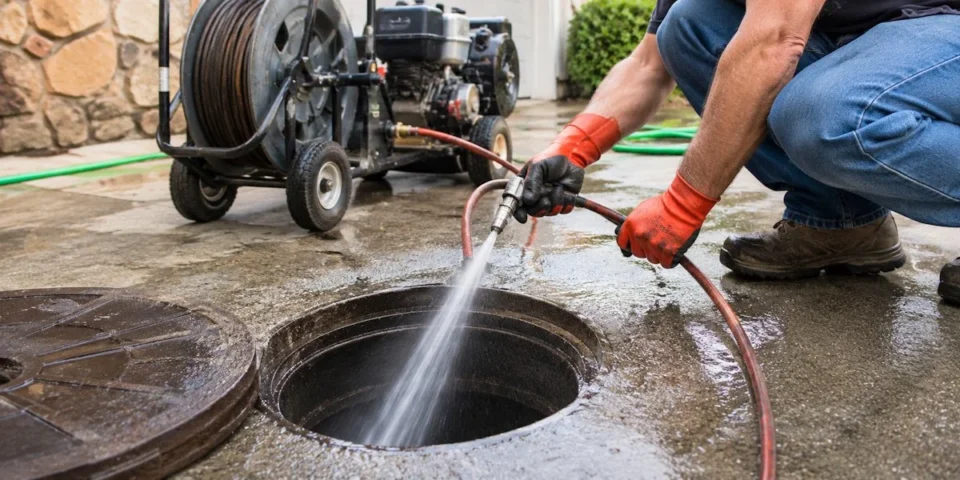
In suitable situations, hydro-jetting offers a more thorough cleaning method. The process uses specialised equipment to direct high-pressure water through plumbing lines, breaking up and flushing away many types of buildup.
Related reading: When Your Water Has a Story Beneath the Surface
Unlike simply pushing a hole through a blockage, hydro-jetting can clean substantial portions of the pipe’s interior. That can be useful for commercial kitchens, busy properties, and residential sewer lines affected by recurring grease or debris accumulation.
It’s not the right solution for every pipe, though. Older, fragile, cracked, or severely damaged plumbing may not tolerate high-pressure cleaning safely. A responsible plumber should assess the condition of the line and determine whether this method is appropriate before starting work.
Hydro-jetting also isn’t a permanent answer to every recurring blockage. If tree roots keep entering through a damaged joint, cleaning may restore flow temporarily without addressing the underlying defect. In that case, repairing the pipe is usually necessary to prevent the problem from returning.
The best approach depends on the actual cause, not simply on which cleaning method sounds most powerful.
What Homeowners Can Do Before Calling a Plumber
There are a few sensible steps you can take when a drain starts acting up. First, stop adding water if the fixture is close to overflowing. Continuing to run a tap or flush a toilet can make a backup worse.
Related reading: When Your Tap Tastes a Little Too Sharp: A Real Look at Chlorine in Everyday Water
For a minor blockage in a single sink, a plunger may help. Remove visible debris from the stopper or strainer, and follow the manufacturer’s instructions if using any plumbing product. Never mix drain cleaners or combine chemical cleaners with other substances, as dangerous reactions can occur.
If several fixtures are affected, sewage appears, or the blockage returns quickly after clearing, stop experimenting and contact a professional. Tell the plumber which fixtures are affected, when the problem began, and whether you’ve already used any chemical products.
This information helps the plumber assess the situation and arrive prepared with suitable equipment.
It’s also worth keeping a record of recurring problems. Dates, symptoms, and previous repairs can reveal patterns that might otherwise be overlooked.
Prevention Is Cheaper Than Repeated Repairs
Good drainage maintenance is mostly about avoiding habits that place unnecessary strain on your plumbing. Keep food scraps and grease out of kitchen drains, use hair catchers in showers, and flush only toilet paper and human waste unless your plumbing professional advises otherwise.
If your property has large trees near the sewer line, ask whether periodic inspections would be sensible. Older homes may benefit from an assessment of their underground drainage, particularly if they’ve experienced repeated backups.
There is no universal schedule that suits every property. The right maintenance routine depends on pipe materials, household usage, local conditions, and the system’s overall age.
A Clear Drain Starts With Understanding the Cause
A blocked drain isn’t always a major problem, but repeated blockages deserve more than another temporary fix. Recognising warning signs, practising sensible maintenance, and using professional inspection methods when necessary can help protect your plumbing system.
The goal isn’t to spend money on unnecessary services. It’s to understand what’s happening inside your pipes and choose a solution that addresses the real issue.
When water drains freely, most people don’t give the plumbing a second thought. Keeping it that way starts with a few everyday habits and the willingness to investigate problems before they turn into something bigger.